Here’s the twist most “Titan vs Fastrack” searches miss: both brands are made by the same company. Fastrack is a wholly-owned youth-focused label from Titan Company Limited (Tata Group) — not a rival, but a sister brand with its own design language and price ceiling. So the real question isn’t which company builds a better watch. It’s which of the two closets — Titan’s formal, long-life catalog or Fastrack’s cheaper, faster-refreshing one — actually matches how you dress and what you want to spend. This guide compares them on price, materials, design, movement, and service, then gives you one real starter pick from each.
Company Background & Positioning
Titan launched in 1984 as India’s first quartz watch brand, built by Titan Company Limited — a joint venture originally between the Tata Group and the Tamil Nadu government, now majority Tata-owned. It built its name on precision and durability at a time when most Indian watches were mechanical and imported parts were scarce.
Fastrack arrived in 1998, launched by the same Titan Company as a spin-off aimed squarely at India’s then-emerging youth market — bold colours, digital-analog hybrids, and price points a college student could actually afford. It’s been run as its own retail brand for years, with its own stores and identity, but the parent company, factories, and after-sales network are shared with Titan. Buying Fastrack isn’t buying a cheaper knockoff of Titan — it’s buying Titan Company’s deliberate answer to “what if a watch didn’t have to look formal or cost a month’s pocket money.”
Price & Value
Titan’s catalog starts around ₹1,300–1,500 for basic analog models, with most of the range sitting between ₹2,000 and ₹6,000. Premium lines — Raga, Nebula, Edge — climb well past ₹10,000 and into ₹50,000+ territory for solid-gold or titanium pieces.
Fastrack starts lower, around ₹700–1,000, with the bulk of the catalog between ₹1,000 and ₹3,000. Even its priciest chronographs and smartwatches rarely cross ₹6,000. If your budget is genuinely tight, Fastrack simply has more options under ₹2,000 than Titan does. If you want room to go premium later while staying inside the same trusted service network, Titan gives you that headroom.
Build Quality & Materials
Titan’s mid-to-premium lines use higher-grade stainless steel, scratch-resistant mineral or sapphire-coated crystal, and generally tighter manufacturing tolerances — a byproduct of four decades of focused watchmaking. These are watches built to be worn daily for a decade or more without the case or crystal visibly degrading.
Fastrack uses similar base materials at the top of its range, but leans on resin, plastic composite cases, and simpler mineral crystal at the low end to hit its price points. That’s not a defect — it’s the trade-off that makes a ₹900 watch possible — but it does mean Fastrack’s entry-level pieces won’t hold up to the same multi-decade lifespan as Titan’s core steel lines. Our water resistance guide is worth checking before you commit either brand to daily gym or outdoor wear.
Design & Style
Titan leans classic and formal — clean dials, restrained colourways, and a design language that barely changes year to year. That’s a feature, not a limitation: a Titan bought today will still look appropriate with a shirt and trousers in 2035. It’s the safer choice for office wear, gifting an older relative, or anywhere you want the watch to disappear into the outfit rather than announce itself.
Fastrack is the opposite bet — bold colour pops, chunky cases, digital-analog hybrids, and a much faster design refresh cycle with new colourways most seasons. It’s built for a younger, more casual wardrobe: college, first job, weekend wear. If your day-to-day outfit skews T-shirts and sneakers rather than shirts and formal shoes, Fastrack’s design language will simply fit better.
Movement & Technology
Both brands run predominantly on quartz movements. Titan is the one that pushes further — its premium Edge and Nebula lines include automatic and even mechanical pieces, along with ceramic and titanium cases in the higher tiers, none of which Fastrack currently offers.
Fastrack’s technology push instead goes into its smartwatch range (Reflex, FS1) rather than analog innovation — Bluetooth calling, fitness tracking, and app connectivity at prices well under what a comparable Titan smartwatch costs. If movement variety and premium materials matter to you, that’s a Titan strength; if you specifically want a budget smartwatch, Fastrack is the stronger bet of the two. Our movement types guide breaks down what each mechanism actually means day to day.
Warranty & After-Sales Service
This is the one category where Fastrack fully inherits Titan’s advantage. Both brands are serviced through the same Titan Company network — Titan World and Helios stores across India — so a warranty claim or repair follows the identical process regardless of which badge is on the dial. Standard warranty runs one to two years depending on the model and mechanism for both brands.
In a market where budget watch brands often mean patchy or nonexistent service, this is Fastrack’s biggest edge over other sub-₹3,000 competitors: you get Titan-grade after-sales support at Fastrack prices.
| Aspect | Titan | Fastrack |
|---|---|---|
| Entry price | ~₹1,300 | ~₹700 |
| Typical range | ₹2,000–₹15,000+ | ₹1,000–₹5,000 |
| Positioning | Formal, premium, all ages | Casual, youth, trend-led |
| Materials | Steel, sapphire-coated crystal on mid+ lines | Steel/resin mix, mineral crystal |
| Design refresh | Slow — classic styling lasts years | Fast — new colourways most seasons |
| Movement variety | Quartz plus automatic/mechanical premium lines | Mostly quartz; smartwatches for tech |
| After-sales network | Titan World / Helios | Titan World / Helios (same network) |
| Best for | Office wear, gifting, long-term ownership | Daily casual wear, first watch, tight budget |

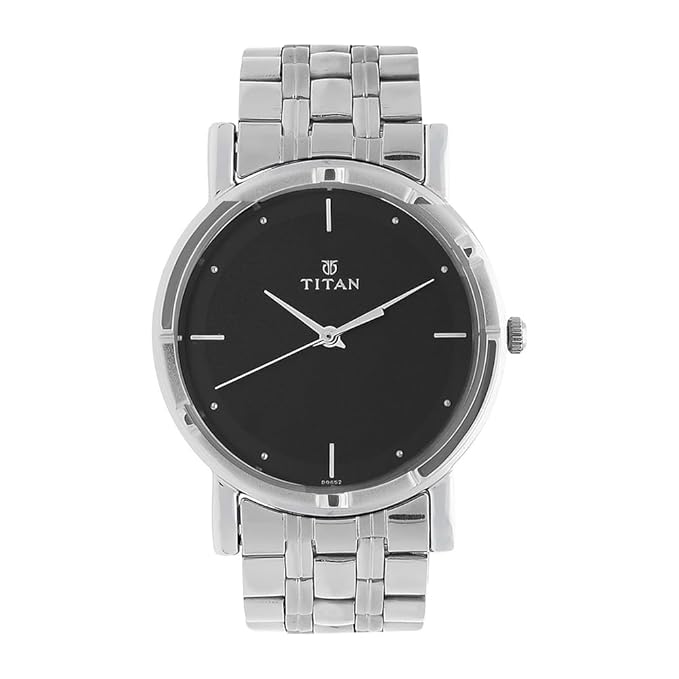
Titan Workwear NT1802SL11
A clean black dial on a black leather strap, backed by 1,011 ratings at 4.3 stars and 700+ bought in the past month — a safe, currently in-stock entry point into Titan’s formal-leaning catalog without spending Titan’s higher-end money.
| Dial | Black, analog |
|---|---|
| Strap | Black leather |
| Movement | Quartz |
| Best for | Office-ready Titan starter |

Fastrack All Nighters NT3165NL01
A multifunction black dial on brown leather with 511 ratings at 4.2 stars — sits toward the top of Fastrack’s range but still well under most Titan pricing, and shows Fastrack can do a dressier look when you want one, not just sport styling.
| Dial | Black, analog, multifunction |
|---|---|
| Strap | Brown leather |
| Movement | Quartz |
| Best for | Dressier Fastrack option |
Which brand should you actually buy? If your wardrobe is mostly shirts and formal shoes, or you want a watch that will still look right in ten years, buy Titan. If you’re on a tighter budget, want faster-changing styles, or want a budget smartwatch, buy Fastrack. If you can’t decide, remember there’s no real downside to Fastrack beyond materials and design shelf-life — the warranty and repair network is identical either way.
Why trust this comparison: every figure here reflects Titan Company’s actual published positioning and currently in-stock Amazon.in listings, not marketing copy from either brand. For deeper picks within each brand, see our full Titan buying guide and Fastrack buying guide, or our watches under ₹2,000 guide if budget is the deciding factor.